
What Is TSA PreCheck? Cost, Eligibility, and How It Works
TSA PreCheck is a Trusted Traveler program that lets low-risk passengers speed through security without removing shoes, laptops, or liquids. This page explains what the program includes, how much it costs, who qualifies, and what limitations to know before enrolling.
TSA · Applies to: Both
Rule last reviewed:
Quick Answer
TSA PreCheck is a five-year Trusted Traveler program for low-risk passengers using participating U.S. airport security checkpoints. When it works, you use a dedicated TSA PreCheck lane and usually keep your shoes, belt, light jacket, laptop, and 3-1-1 liquids in place instead of unpacking at the bin table. First-time enrollment costs vary by provider, currently from $76.75 to $85, and the fee is nonrefundable [1].
| Question | Short answer |
|---|---|
| What is TSA PreCheck? | A TSA Trusted Traveler program that gives eligible, low-risk passengers access to expedited airport security screening for five years [1]. |
| What do you get? | Dedicated TSA PreCheck screening lanes where you generally keep shoes, belts, light jackets, laptops, and 3-1-1 liquids in place [2]. |
| How fast is it? | TSA says 99% of TSA PreCheck members wait under 10 minutes [2]. |
| How much does it cost? | First-time enrollment is provider-priced: $76.75 through IDEMIA, $79.95 through CLEAR, or $85 through Telos as listed by TSA in 2026 [1]. |
| How long does it last? | Membership lasts five years [1]. |
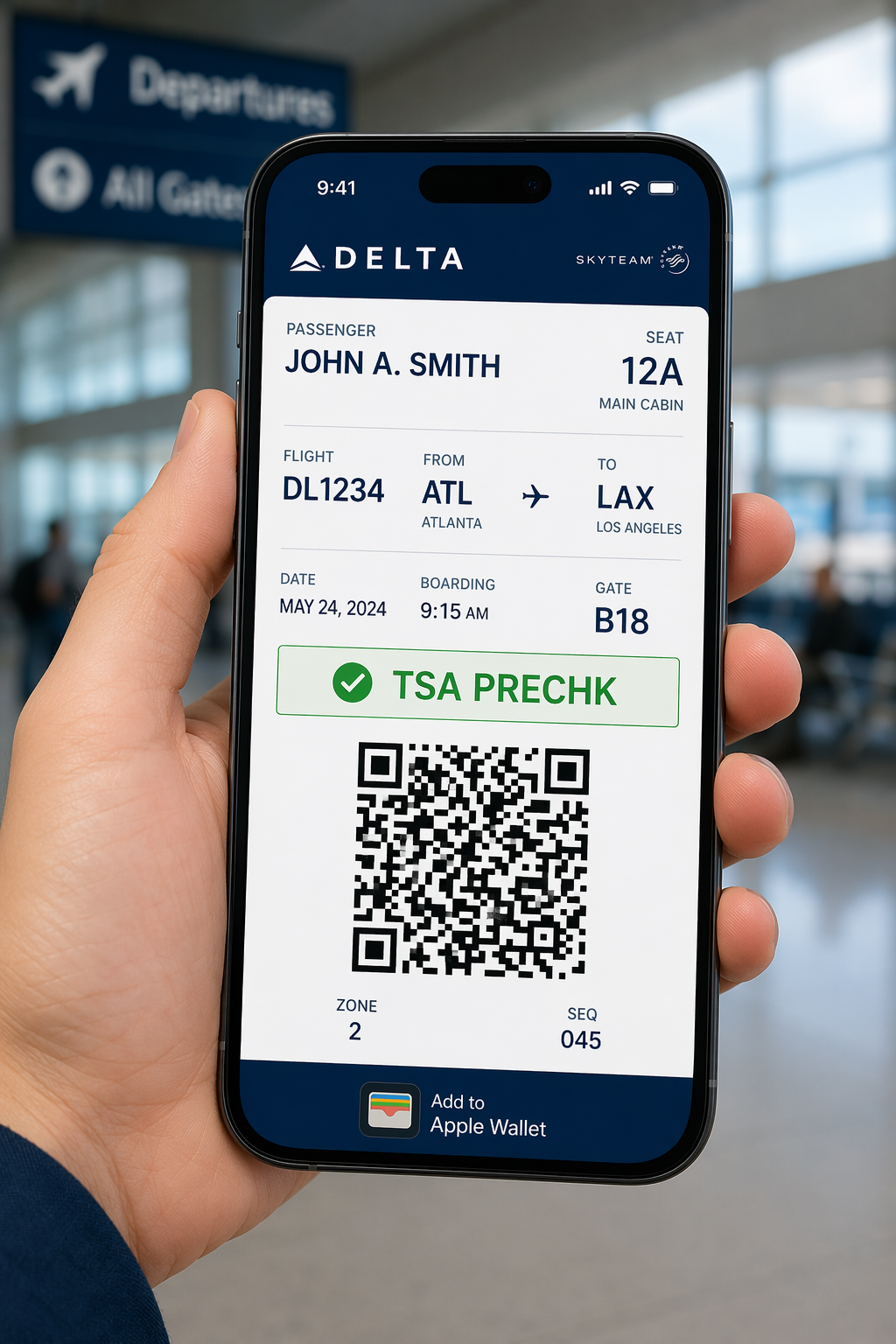
| When does it work? | Only when the TSA PRECHK indicator appears on your boarding pass and you are using a participating airline and airport lane. |
| What does it not cover? | It does not handle customs or immigration when you return from an international trip; that is where Global Entry is the relevant program [3]. |
Freshness note: this article is current for Q3 2026 and uses TSA-published program information. One caveat belongs near the top, not in the fine print: TSA PreCheck is never an absolute right to a specific lane. TSA officers retain discretion at the checkpoint, and a member can still be sent through standard screening.
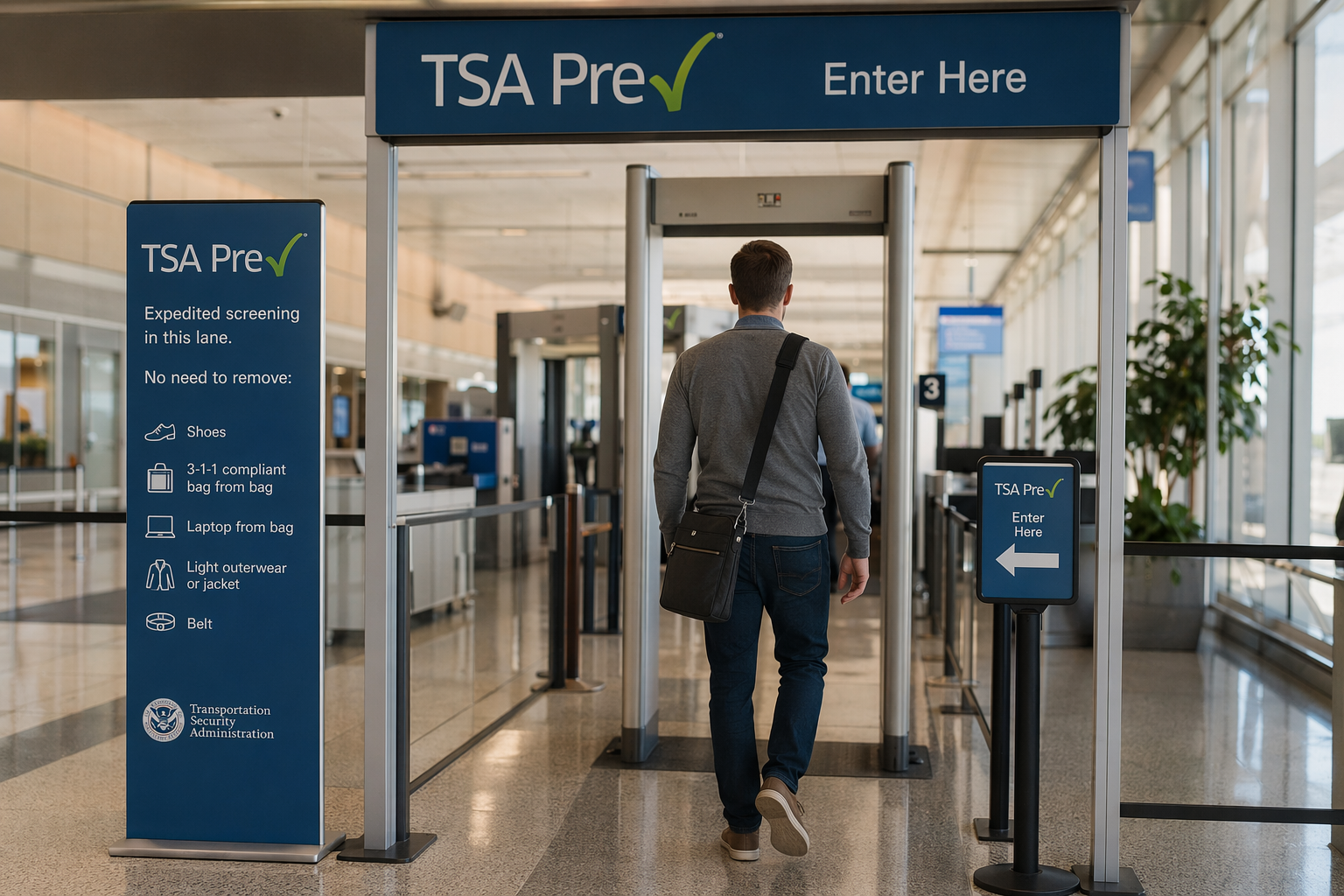
What TSA PreCheck Actually Changes at Security
The useful part of TSA PreCheck is not just the shorter line. It is the smaller number of things you have to do while strangers are waiting behind you. In the TSA PreCheck lane, the normal promise is simple: shoes stay on, belts stay on, light jackets stay on, laptops stay in bags, and compliant 3-1-1 liquids stay packed [2].
That matters most for travelers who fly often enough to know where time disappears. A family is not repacking electronics at the far end of the belt. A business traveler is not rebuilding a laptop bag in socks. A parent is not trying to find the liquids bag while also keeping track of a child’s backpack. The screening is still screening, but it is less fussy.
The program is also no longer a niche airport hack. TSA announced that TSA PreCheck had reached 20 million active members in August 2024; the public figure may now be higher, but that is the latest specific membership milestone in the provided TSA material [4].
Where It Works
TSA PreCheck works at participating U.S. airports and with participating airlines. TSA describes the program as available at more than 200 airports and with more than 100 airlines [5]. Those two conditions matter. A traveler can be a valid member and still not see the benefit on a particular trip if the airport, airline, reservation, or checkpoint setup does not support it.
The practical check is your boarding pass. If the pass does not show TSA PRECHK, do not assume the checkpoint officer will fix it at the lane entrance. The missing indicator usually needs to be corrected through the airline reservation or frequent flyer profile before screening.
Who TSA PreCheck Is For
TSA PreCheck is best understood as a U.S. airport security program for travelers who expect to use participating domestic checkpoints more than once or twice over the five-year membership term. It is especially useful if you travel with a laptop, carry-on liquids, children, work bags, medical supplies, or anything else that makes the standard lane feel like a small unpacking project.
Children get special treatment when traveling with an enrolled adult. Children 12 and under may use TSA PreCheck lanes with an enrolled parent or guardian, and teens 13 through 17 may also receive TSA PreCheck benefits when they are on the same reservation and the TSA PreCheck indicator appears on the teen’s boarding pass [3].
There is one important shortcut: members of Global Entry, NEXUS, and SENTRI receive TSA PreCheck benefits. That does not make the programs identical. It means some travelers already have access to TSA PreCheck through another Trusted Traveler membership and may not need to apply for TSA PreCheck separately [3].
How Enrollment Works
The enrollment process is short compared with many travel documents, but it is not instant at the airport. TSA lists more than 1,300 enrollment centers, and the basic flow is online pre-enrollment followed by an in-person appointment [1].
- Choose an enrollment provider through TSA’s official PreCheck site.
- Complete the online pre-enrollment form.
- Attend an in-person appointment for identity verification and fingerprinting.
- Receive your Known Traveler Number, usually abbreviated KTN.
- Add the KTN to airline reservations and frequent flyer profiles before check-in.
TSA and enrollment guidance describe the online portion as taking about five minutes and the in-person appointment as about 10 minutes. Most applicants receive a Known Traveler Number in 3 to 5 days, though TSA advises that some applications can take up to 60 days [1][6].
That timing is good enough for many upcoming trips, but not for all of them. If your flight is tomorrow, TSA PreCheck is not a reliable last-minute fix. If your trip is several weeks out, enrollment may be practical, provided appointment availability near you cooperates.
Cost Is Provider-Priced, Not One Universal Fee
The clean way to quote TSA PreCheck pricing in 2026 is as a range, not a single number. TSA lists first-time enrollment at $76.75 through IDEMIA, $79.95 through CLEAR, and $85 through Telos. Renewal fees also vary by provider, from $58.75 to $69.95 in TSA’s current fee table [1].
The first-time application fee is nonrefundable, so it is worth checking the provider, location, appointment availability, and price before you commit. TSA also announced a 2026 promotion in which travelers aged 30 and under could save $20 on a new TSA PreCheck membership, which is a reminder that effective prices can change through provider or promotional offers [7].
The Limits That Cause Most PreCheck Friction
Most disappointment with TSA PreCheck comes from expecting it to behave like a permanent status printed on your forehead. It is not. It has to connect correctly to each eligible reservation, appear on the boarding pass, and be honored at a participating checkpoint.
- No TSA PRECHK on the boarding pass: expect to use standard screening unless the airline can correct the reservation before you reach security.
- Nonparticipating airline or airport setup: membership alone does not create a PreCheck lane where the program is not operating.
- Officer discretion: TSA can direct any passenger, including a member, through standard screening.
- International return: TSA PreCheck does not process customs or immigration after arriving in the United States from abroad.
- Identification rules: TSA PreCheck does not replace ID requirements, including current REAL ID rules.
The boarding-pass point is the one to check before leaving for the airport. Your KTN should be saved in your airline profile and attached to the reservation before check-in. If you book through a travel portal, a work travel system, or a companion’s account, verify that the KTN actually made it onto the ticket.
TSA PreCheck vs. Global Entry
TSA PreCheck and Global Entry are easy to confuse because Global Entry members receive TSA PreCheck benefits. The difference is the part of the trip they address. TSA PreCheck is for airport security screening before departure. Global Entry is for expedited processing when entering the United States after international travel, and it includes TSA PreCheck benefits for eligible members [3].
| Program | Main use | Includes TSA PreCheck benefits? |
|---|---|---|
| TSA PreCheck | Expedited security screening before departure at participating U.S. airports | Yes, that is the program itself |
| Global Entry | Expedited U.S. entry processing after international travel | Yes, for eligible members |
| NEXUS or SENTRI | Other Trusted Traveler programs for specific border-travel contexts | Yes, for eligible members |
If you mostly fly within the United States, TSA PreCheck may be the simpler choice. If you regularly return to the United States from international trips, Global Entry may prevent a second enrollment decision because it includes PreCheck benefits. The right answer depends less on the airport line you dislike most and more on which part of travel you actually repeat.
Is TSA PreCheck Worth It?
For travelers who fly more than occasionally through participating U.S. airports, TSA PreCheck is usually a strong value. Spread across five years, the fee is modest compared with the practical benefit of keeping screening simple, especially if you carry a laptop, travel with children, or dislike rebuilding your bag in the middle of a checkpoint.
It is less compelling if you rarely fly, mostly use airports or airlines where PreCheck is not available, or need help primarily with customs after international trips. It is also not something to buy with the expectation that every future boarding pass will automatically unlock the lane.
The practical decision rule is this: enroll if you expect to use participating U.S. airport security often enough over five years that shorter, less intrusive screening will matter to you. Just enroll with the correct expectation. The benefit is real, but it is conditional, provider-priced, and checkpoint-specific.
References
- TSA PreCheck homepage — TSA.gov
- TSA PreCheck fact sheet — TSA.gov
- What is the difference between Global Entry, TSA PreCheck® and other Trusted Traveler programs? — TSA.gov
- TSA PreCheck® reaches milestone with 20 million members — TSA.gov — August 8, 2024
- TSA PreCheck benefits page — TSA.gov
- Guide to the TSA PreCheck application process — Chase
- Travelers aged 30 and under save $20 on new TSA PreCheck® membership — TSA.gov — April 29, 2026
Ready to enroll?
Spotted something outdated?
Report a correction if this explainer no longer matches the current rule. Report a correction.