
No Passport Needed for Puerto Rico – Here's the TSA ID You Need
US citizens flying to Puerto Rico don't need a passport. This article explains which TSA-accepted IDs you must bring – including the REAL ID enforcement since May 2025 and the new ConfirmID option – plus key rules for minors, expired licenses, and edge cases like foreign connections.
TSA · Applies to: Domestic
Rule last reviewed:
No. If you are a U.S. citizen flying from the United States to Puerto Rico, you do not need a passport. USA.gov says U.S. citizens do not need a passport to travel to or from Puerto Rico, because Puerto Rico is a U.S. territory.[1]
That answer is only half of what matters at the airport. For a normal U.S.-Puerto Rico flight, the document you need at the TSA checkpoint is a REAL ID-compliant driver’s license or identification card, or another ID that TSA accepts for domestic air travel.[2]
The ID TSA Wants To See For Puerto Rico
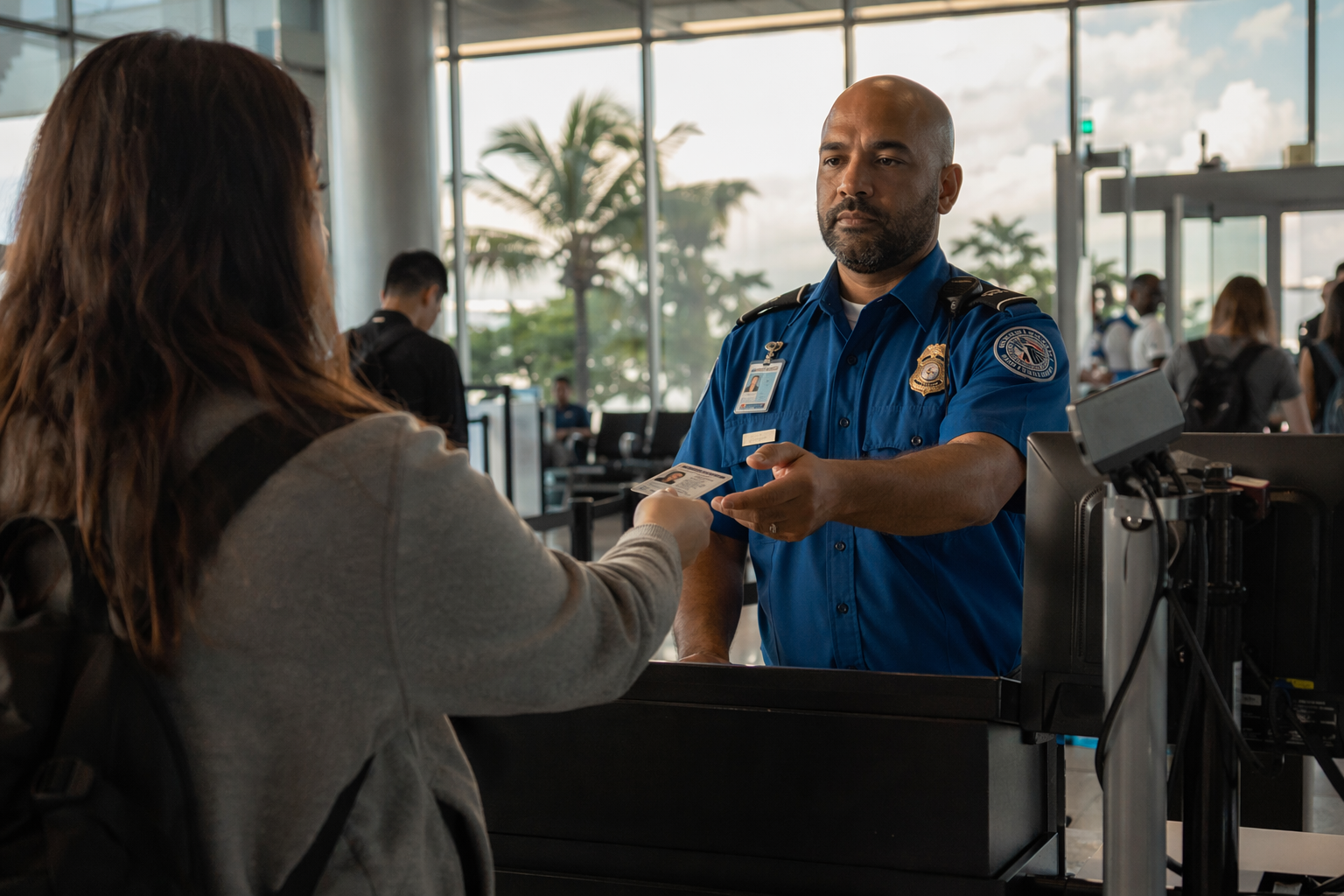
At the checkpoint, Puerto Rico works like a domestic destination for U.S. citizens. The TSA officer is not looking for a Puerto Rico passport stamp. The officer is checking whether the person holding the boarding pass can present acceptable identification.
The safest everyday choice is a REAL ID-compliant state driver’s license or state ID. Since May 7, 2025, TSA has required travelers using a state-issued driver’s license or identification card at airport security to present a REAL ID-compliant version, unless they use another acceptable form of ID.[2]
Puerto Rico is not outside that rule. TSA’s April 2025 Puerto Rico REAL ID notice confirmed that the May 7, 2025 compliance date applied to Puerto Rico residents as well.[3]
The Most Useful TSA-Accepted IDs
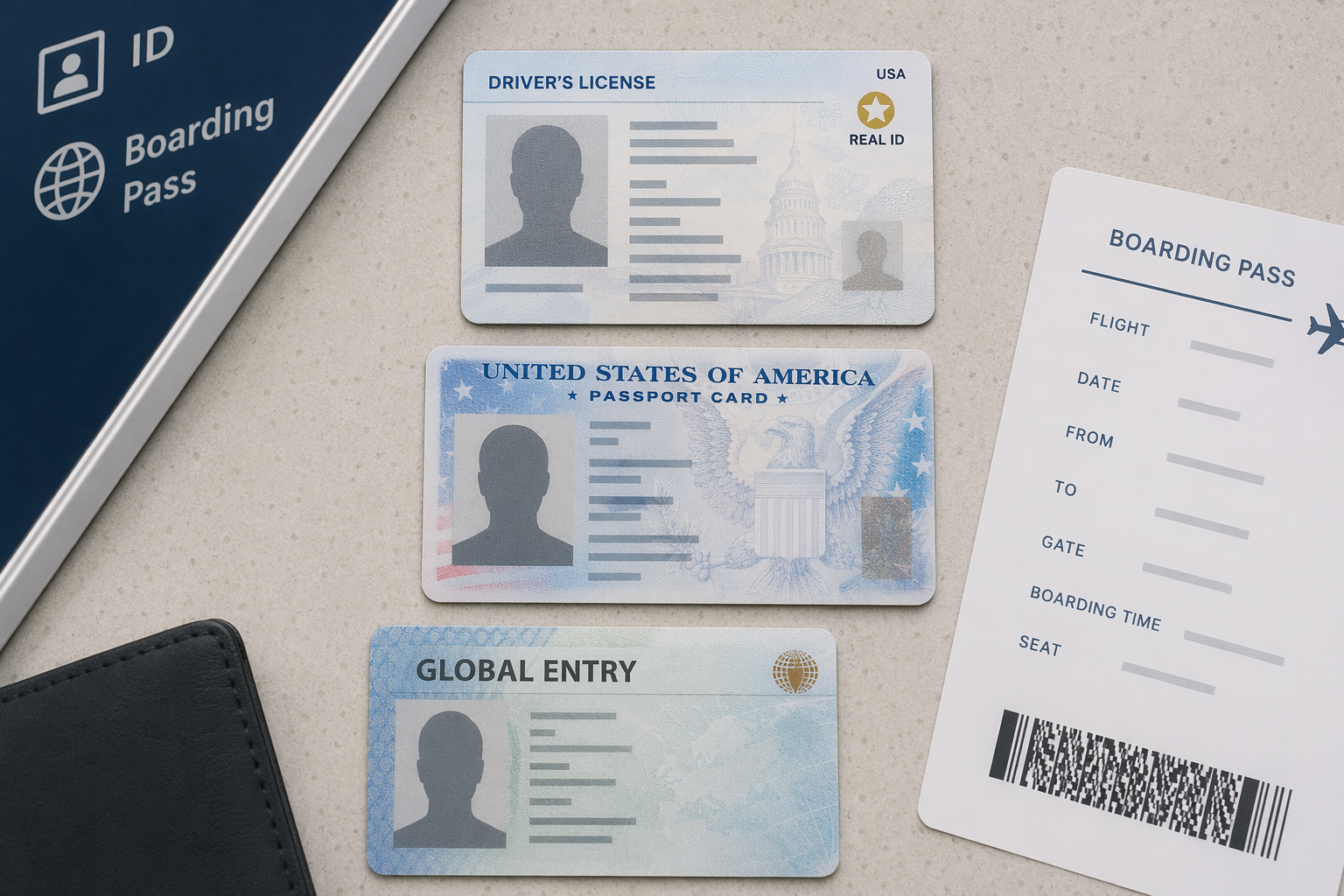
If your license is REAL ID-compliant, that is usually the cleanest answer. If it is not, “another acceptable ID” does not mean any government-looking card. It means one of the categories TSA lists as acceptable at the checkpoint.[2]
- REAL ID-compliant driver’s license or state photo ID
- U.S. passport book
- U.S. passport card
- DHS trusted traveler card, including Global Entry, NEXUS, SENTRI, or FAST
- U.S. Department of Defense ID, including IDs issued to dependents
- Permanent resident card
- Border crossing card
- Federally recognized Tribal Nation or Indian Tribe photo ID
- Transportation Worker Identification Credential
- Merchant Mariner Credential
- Veteran Health Identification Card
TSA’s full list includes additional categories, and the agency can update its identification page. If you are relying on anything less common than a REAL ID license, passport book, passport card, trusted traveler card, or military ID, check TSA’s current list before leaving for the airport.[2]
REAL ID Is The Part People Still Get Wrong
The easy sentence — “your driver’s license is enough” — is now too loose. A state license works at TSA if it is REAL ID-compliant, or if TSA otherwise accepts it under its current rules. A non-compliant state license is not the same thing as a REAL ID license just because it came from a DMV.
Look for the REAL ID marking on the card. Many states use a star in the upper portion of the license or ID. If your card says something like “not for federal identification,” do not treat it as your main airport ID for Puerto Rico.
| What You Have | Checkpoint Meaning For A Puerto Rico Flight |
|---|---|
| REAL ID-compliant state license or state ID | Accepted for domestic TSA screening, assuming the card is otherwise valid |
| Non-REAL ID state license | Do not rely on it as your only ID after May 7, 2025; bring another TSA-accepted ID |
| U.S. passport book | Accepted by TSA, even though a passport is not required for U.S. citizens flying to Puerto Rico |
| U.S. passport card | Accepted by TSA for identification at the checkpoint |
| Global Entry or other DHS trusted traveler card | Accepted by TSA as a listed identification category |
This is where a passport can still be useful without being required. If your license is not REAL ID-compliant, a passport book or passport card can solve the TSA ID problem for a domestic Puerto Rico flight. The passport is acting as accepted identification, not as an entry document for Puerto Rico.
Expired, Temporary, Missing: The ID Edge Cases
Small details decide real checkpoint outcomes. The name of the document matters, but so does whether it is expired, temporary, or actually in your hand.
An Expired License May Still Work
TSA says it accepts expired driver’s licenses or state-issued IDs up to two years after expiration.[2] That is a narrow but important rule. A license that expired last month is not the same checkpoint problem as a license that expired several years ago.
Do not stretch the rule. If your ID is outside TSA’s expiration window, bring a different accepted ID if you have one.
A Temporary Paper License Is Not Accepted
A temporary paper driver’s license is not accepted at TSA checkpoints.[2] That can feel unfair when the DMV issued it recently, but the checkpoint rule is not “the DMV says I can drive.” It is whether TSA accepts the document for airport identification.
If your permanent license has not arrived, pack another TSA-accepted ID: passport book, passport card, trusted traveler card, military ID, permanent resident card, or another listed option that applies to you.
Children Under 18 Do Not Need TSA ID
TSA does not require children under 18 to provide identification when traveling within the United States.[2] That includes a domestic flight to Puerto Rico. The adult companion still needs acceptable ID.
Airlines can have their own procedures for minors, especially unaccompanied minors, so check the airline’s requirements too. That is separate from the TSA checkpoint ID rule.
If You Have No Acceptable ID: ConfirmID Is A Fallback, Not A Shortcut
Since February 1, 2026, TSA has offered ConfirmID for travelers who arrive without acceptable identification. The program costs $45, is paid through Pay.gov, and is valid for 10 days from the start date entered by the traveler.[4]
That does not make ConfirmID a guaranteed rescue. TSA states that payment does not guarantee successful identity verification, and travelers whose identity cannot be verified will not be allowed into the screening checkpoint.[4]
The practical use case is narrow: you are trying to travel without an acceptable ID and need to attempt TSA’s identity verification process before or during the trip window. If you have a REAL ID license, passport card, passport book, Global Entry card, or another accepted ID, carrying that document is simpler than depending on verification.
| ConfirmID Detail | What It Means |
|---|---|
| Launch timing | Available since February 1, 2026 |
| Cost | $45 |
| Validity | 10 days from the start date |
| Guarantee | No guarantee that TSA can verify your identity |
| Best read | Conditional fallback when you do not have acceptable ID |
Leave extra time if you are using any identity-verification fallback. TSA officers still have to resolve the person in front of them, not the version of the trip that looked fine on a packing list.
When The Passport Answer Changes
The no-passport answer is for U.S. citizens on ordinary flights between the United States and Puerto Rico. It should not be stretched across every itinerary that happens to include Puerto Rico.
- Foreign connection: If your routing connects through a non-U.S. airport, you may need a passport for that international segment.
- Cruise itinerary: Cruises that depart from, return to, or call at Puerto Rico can involve different document rules than a domestic flight.
- Non-U.S. citizens: Travelers who are not U.S. citizens must follow the entry and immigration rules that apply to their status, which may include a passport and visa or ESTA requirements.
Those are not minor technicalities. A traveler flying nonstop from Orlando to San Juan is in a different document situation than a traveler whose itinerary leaves the U.S. system before reaching Puerto Rico.
Pre-Departure Check
For a normal domestic flight to Puerto Rico, a U.S. citizen does not need a passport. Bring a REAL ID-compliant license or state ID, or carry another TSA-accepted document such as a passport book, passport card, Global Entry card, military ID, or other ID on TSA’s list.
If your only license is temporary and paper, do not rely on it. If your license is expired, check whether it is within TSA’s two-year acceptance window. If a child under 18 is traveling domestically, TSA does not require that child to show ID, though the airline may still have procedures of its own.
If you have no acceptable ID, ConfirmID may be an option, but it costs $45, lasts 10 days from the start date, and does not guarantee successful verification. TSA officers retain final discretion at the checkpoint.
References
- Do you need a passport to travel to or from U.S. territories?, USA.gov, March 31, 2026.
- Identification, Transportation Security Administration.
- Countdown for Puerto Rico residents to be REAL ID compliant by May 7, 2025, Transportation Security Administration, April 24, 2025.
- TSA ConfirmID, Transportation Security Administration.
Ready to enroll?
Spotted something outdated?
Report a correction if this explainer no longer matches the current rule. Report a correction.